You Won’t Believe What I Found Eating Slow in New York
New York isn’t just skyscrapers and subway rush—there’s a quieter, tastier side if you slow down. I spent a week savoring the city like a local, one bite at a time. From hidden delis in Brooklyn to family-run noodle spots in Queens, real flavor hides where the pace is slower. This isn’t about ticking off tourist traps—it’s about tasting stories, history, and heart. If you’ve ever felt overwhelmed by the city’s energy, let me show you how to eat with intention, connect with neighborhoods, and fall in love with New York all over again.
The Case for Slow Travel in a Fast City
New York City pulses with urgency. The sidewalks hum with hurried footsteps, the subway doors close without apology, and even lunch breaks feel like sprints. It’s easy to believe that to experience the city, you must move at its pace—quick, loud, and relentless. But beneath the surface of this kinetic energy lies another rhythm, one that rewards patience and presence. This is the essence of slow travel in an urban jungle: not checking off landmarks, but lingering in moments that reveal the soul of a place. In New York, that soul is often served on a plate.
Slow travel doesn’t require abandoning the city’s icons. You can still marvel at the Empire State Building or stroll through Central Park. But instead of rushing from one to the next, the slow traveler chooses depth over distance. They might spend an entire morning in a single neighborhood, watching how sunlight hits a brownstone row in Brooklyn Heights or how steam rises from a sidewalk grate outside a century-old bakery. The goal is immersion, not accumulation. And few things invite immersion like food. A meal eaten slowly—with attention to flavor, setting, and company—becomes a bridge between visitor and resident, outsider and insider.
Consider the difference between grabbing a slice of pizza on the run and sitting at the counter of a family pizzeria in Bensonhurst, where the owner remembers your coffee order by the third day. Or compare the experience of downing a latte in a chain café to sipping espresso at a West Village corner spot where the barista knows the regulars by name and the morning paper still arrives in print. These are not just meals; they are micro-interactions that build familiarity. They are the quiet counterpoints to the city’s roar.
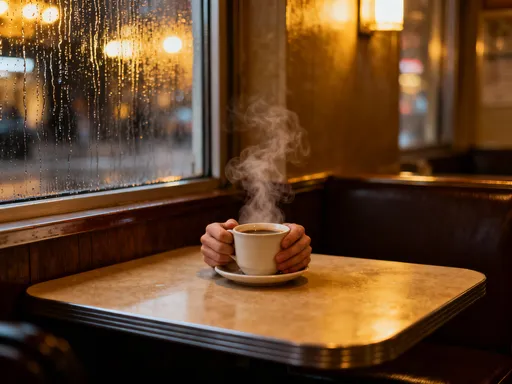
One rainy afternoon in Harlem, I ducked into a small Haitian café to escape the downpour. What began as shelter turned into a two-hour conversation with the owner, Madame Elise, who shared stories of her journey from Port-au-Prince and the recipe for her spiced goat stew—passed down from her grandmother. I didn’t plan to spend the afternoon there. But slowing down created space for connection, and that meal remains one of the most vivid memories of my trip. In a city that glorifies speed, choosing slowness is a radical act—one that unlocks richer, more personal experiences.
Why Food Tells the Real Story of New York
If New York is a living archive of cultures, then its kitchens are the keepers of the records. The city’s food landscape is not just diverse—it’s deeply historical. Every dumpling folded in a Flushing basement kitchen, every arepa pressed in a Washington Heights bodega, every knish rolled in a Brighton Beach deli carries generations of migration, adaptation, and pride. To eat in New York is to taste the resilience and creativity of those who built their lives here, often starting with little more than a recipe and a dream.
Take dim sum in Flushing, Queens. On a Saturday morning, the dining rooms of unassuming restaurants fill with families speaking Cantonese, Mandarin, and Fujianese. Steam baskets rise like skyscrapers from rolling carts, carrying delicate har gow, fluffy char siu bao, and golden taro dumplings. The experience is not just about flavor—it’s about ritual. Grandparents teach grandchildren how to use chopsticks; servers move with practiced efficiency, refilling tea without being asked. These meals are not performed for tourists; they are lived traditions, preserved in plain sight.
Likewise, a Dominican breakfast in Washington Heights offers more than mangu and fried eggs. It offers a window into a community that has shaped Upper Manhattan for decades. At a corner café on 187th Street, the air is thick with the scent of fried plantains and strong coffee. Music plays softly—merengue or bachata—and the counter is lined with regulars discussing the weather, the news, and family updates. The food is hearty, comforting, and deeply rooted in island traditions, yet adapted to life in a northern city. To sit and eat here is to witness cultural continuity in action.
And then there are the Jewish delis of the Lower East Side, where corned beef is carved by hand and rye bread arrives warm. Though the neighborhood has changed dramatically, these institutions endure. Katz’s Delicatessen, still operating since 1888, is more than a restaurant—it’s a cultural landmark. The act of ordering at the counter, watching meats sliced to order, and hearing the calls of the servers connects diners to a vanished world of tenements and garment workers. Even if you’ve never lit a Sabbath candle, you feel the weight of history in every bite of pastrami.
These experiences are not curated for Instagram. They are lived, often quietly, in neighborhoods where food is not a trend but a lifeline. The aromas of cumin and cumin-seed bread, the sizzle of garlic in olive oil, the rhythmic thud of a knife on a cutting board—these sensory details are the language of belonging. They tell stories that guidebooks cannot. When you eat slowly, you begin to listen.
Choosing the Right Neighborhoods for a Culinary Deep Dive
Not all neighborhoods lend themselves equally to slow, food-centered exploration. The key is finding places where authenticity thrives, where local life unfolds at a human scale, and where walking from one meal to the next feels natural. Midtown Manhattan, with its high-rise hotels and crowded sidewalks, is designed for efficiency, not intimacy. But just a subway ride away, neighborhoods like Astoria, Red Hook, and Jackson Heights offer a different rhythm—one that invites wandering, lingering, and discovery.
Astoria, in northwest Queens, is a haven for food lovers seeking both variety and character. Once a Greek enclave, it now embraces a broader Mediterranean and Middle Eastern presence, with Armenian bakeries, Egyptian grocers, and Lebanese grills nestled beside old-school diners. The streets are lined with trees and brownstones, and the pace is noticeably calmer than in Manhattan. A morning walk might lead you to a small café where men play backgammon over strong coffee, or to a bakery where flaky bougatsa is dusted with powdered sugar and cinnamon. Because the area is compact and walkable, you can cover ground without rushing—stopping for a pastry, browsing a record shop, then settling into a late lunch.
Red Hook, a peninsula in Brooklyn jutting into the Upper New York Bay, offers a more secluded experience. Once an industrial port, it has transformed into a quiet, artsy enclave with a strong maritime feel. The area is not served by the subway, which keeps tourist traffic low and gives it an off-the-grid charm. Here, you’ll find a community farmers market on Saturdays, a beloved taco truck by the pier, and a waterfront bar where locals sip drinks as the sun sets over the Statue of Liberty. The lack of mass transit means you’ll likely arrive by bus or ferry, which already sets a slower tone. Meals here feel unhurried, almost coastal, despite being just minutes from downtown Brooklyn.
Then there is Jackson Heights, one of the most linguistically diverse neighborhoods in the world. A single block can take you from a Tibetan momo stall to a Colombian bakery to a Bangladeshi sweet shop. The 7 train stops right in the heart of it, making access easy, but the real magic happens when you step off the main avenue and explore the side streets. The neighborhood has a vibrant street life—vendors sell fresh mangoes and plantains from carts, and the scent of roasted corn drifts through the air in summer. Because so much of the dining is casual and counter-service, you can sample widely without committing to long sit-down meals, making it ideal for a leisurely day of tasting.
When choosing where to focus your culinary journey, consider not just what’s on the menu, but how the neighborhood feels underfoot. Is it walkable? Does it have benches, parks, or quiet corners where you can pause? Are people speaking languages you don’t understand? These are signs of authenticity. And remember: the best meals often come from places that don’t need to advertise. They’re found where locals eat, not where tourists are herded.
How to Find the “Real” Eats (Without Relying on Apps)
In an age of algorithms and star ratings, it’s tempting to let apps dictate where we eat. But the most memorable meals are rarely the top-ranked ones. They are the ones discovered by chance, by conversation, by paying attention. To find the real eats in New York, you must learn to look beyond the screen. You must become a observer, a listener, a wanderer.
Start by watching where people line up. Not the line for the viral cronut, but the quiet queue at a corner grocery where workers from the nearby post office buy their lunches. These unmarked delis, often family-run, serve rice and beans, roast chicken, or overstuffed sandwiches on fresh bread—simple, satisfying, and deeply local. In Flatbush, I once followed a cluster of uniformed nurses into a small Caribbean spot tucked between a laundromat and a bodega. There was no sign in English, no online menu, but the smell of curried goat and fried dough was irresistible. I pointed at what others were eating, smiled, and was rewarded with one of the best meals of the trip.
Talk to people. Not just servers, but shopkeepers, barbers, librarians. They are the unsung guides of the city. At a used bookstore in Park Slope, I mentioned I was looking for good Italian food. The owner, a woman in her 60s with silver hair and reading glasses, pulled out a notepad and wrote down three addresses in Bensonhurst, including a pasta shop where the owner’s nonna still rolls dough by hand. “Don’t tell too many people,” she said with a wink. “But you seem like you’ll appreciate it.” That night, I sat in a back booth, eating handmade orecchiette with broccoli rabe, feeling like I’d been let in on a secret.
Walk the side streets. Venture one block off the main drag, then another. In Jackson Heights, the 74th Street station is busy with foot traffic, but just a block over on 35th Avenue, the pace slows. I found a Uighur restaurant there, its windows fogged from the kitchen’s heat, where lamb skewers were grilled over open flames and flatbread was slapped onto the walls of a tandoor oven. There were no tourists, no English menu—just a nod from the cook and a plate of food that tasted like the Silk Road.
These discoveries require patience. You might walk for 20 minutes without finding anything. You might enter a place and realize it’s closed. But that’s part of the rhythm. The hunt is not a distraction from the meal—it’s part of the experience. And when you finally sit down to eat, the food tastes better because you earned it. Not through a five-star review, but through curiosity, courage, and a willingness to get a little lost.
The Art of the Unhurried Meal
In a city where even dogs seem to walk faster, eating slowly is an act of quiet rebellion. It requires intention. It means resisting the urge to check your phone, to rush to the next thing, to treat food as fuel rather than experience. The unhurried meal is not about luxury or expense—it’s about presence. It’s about tasting the vinegar in the coleslaw, noticing the texture of the bread, hearing the laughter from the next table.
To cultivate this mindset, start small. Visit a café mid-week, when the crowds are thinner. Choose counter seating instead of a table—it puts you closer to the action, more likely to exchange a word with the barista or the person beside you. Order one dish, not three. And put your phone away. Not in your pocket—on silent, face down, out of reach. This simple act creates space for observation, for listening, for being where you are.
One of the most transformative meals I’ve eaten in New York was a four-hour Polish dinner in Greenpoint, Brooklyn. I arrived at a modest restaurant called Polonez just before 5 p.m., the earliest seating. The room was empty. The hostess, an older woman with a kind face, seated me by the window. I ordered the tasting menu, not knowing what to expect. What followed was a procession of dishes: beet soup with dill, potato pancakes with sour cream, cabbage rolls stuffed with pork, and finally, a slice of dense poppy seed cake. Between courses, the owner stopped by to explain each dish, sharing stories of his childhood in Kraków. Time dissolved. The sun set. The restaurant filled. And when I finally stepped back onto the street, the city felt different—softer, more human.
Another morning, I found myself at a small knish stand in Brighton Beach, a neighborhood known for its Russian and Eastern European community. It was 8 a.m., cold and foggy. The vendor, a man in a wool cap, handed me a hot knish wrapped in paper. I leaned against a lamppost and ate slowly, watching elderly couples walk their dogs along the boardwalk. No rush. No agenda. Just the warmth of the pastry, the salt in the air, the quiet hum of a community starting its day. In that moment, I wasn’t a visitor. I was simply there.
Slowness changes how we taste. When we eat quickly, we register only the first impression—sweet, salty, spicy. But when we linger, we notice the aftertaste, the texture, the way a dish evolves as it cools. We begin to appreciate the care behind it. And in that appreciation, we connect—not just to the food, but to the hands that made it, the history it carries, and the place it calls home.
Beyond the Plate: How Food Connects You to People and Place
A meal is never just about nourishment. In New York, it is a form of cultural exchange, a conversation without words. When you eat at a family-run restaurant, you are not just consuming food—you are participating in a legacy. You are sitting in a space that may have survived rent hikes, gentrification, and pandemics because of sheer determination. And if you’re open to it, you might hear the story behind it.
In the Bronx, I met a West African chef named Amadou who runs a small restaurant out of a converted storefront. He emigrated from Senegal two decades ago and started cooking for friends before opening his place. His thieboudienne—fish with tomato and rice—is considered by many in the community to be the best in the city. One afternoon, as he stirred a pot of okra stew, he told me how he sources his spices from a shop in Harlem that’s been there since the 1970s. “This food,” he said, “is not just for eating. It’s for remembering.” His daughter, eight years old, stood beside him, rolling dough for plantain fritters. She will inherit the recipe, and the restaurant, in time.
On Arthur Avenue in the Bronx—the heart of the city’s Italian-American community—I visited a butcher shop that has been in the same family since 1934. The current owner, a man in his 60s named Sal, showed me how they cure their own pancetta and make fresh mozzarella every morning. “My father did this. His father did it in Sicily,” he said, slicing a piece of soppressata for me to try. “We don’t change. We can’t. People come here for the taste of home.” The shop is small, unmarked by neon, unlisted on most apps. But on Sunday mornings, the line stretches down the block. These are not tourists. They are families carrying on traditions, one meatball sub at a time.
These moments of connection are what elevate travel from sightseeing to meaning-making. When you share a meal with a stranger, accept a taste from a vendor, or listen to a story from a cook, you are not just observing culture—you are engaging with it. You are reminded that behind every dish is a human being with a history, a struggle, a hope. And in that recognition, you find a deeper kind of satisfaction—one that lasts long after the last bite.
Putting It All Together: A Sample 3-Day Slow Food Itinerary
Slow travel doesn’t require grand plans. Often, the simplest itineraries yield the richest experiences. Here is a realistic, flexible three-day plan designed for depth, discovery, and delight—perfect for a visitor who wants to taste New York beyond the postcard.
Day one begins in Astoria. Take the N train to 30th Avenue in the morning. Start with coffee and a spinach pie at a Greek café where the owner greets regulars with hugs. Then wander toward the waterfront, stopping at a Middle Eastern grocery to sample olives and fresh pita. For lunch, try a lamb gyro from a small stand near Socrates Sculpture Park. In the afternoon, visit a local bookstore or sit by the East River with a pastry from a nearby bakery. For dinner, reserve a table at a family-run Italian restaurant where the owner might pour you a glass of house wine and tell you about his childhood in Calabria.
Day two takes you to Jackson Heights. Arrive via the 7 train around 10 a.m. Begin with a Colombian arepa from a corner stand, then explore the side streets, peeking into spice shops and sweet stores. Visit the farmers market if it’s Saturday. For lunch, find a Uighur or Tibetan restaurant and order dumplings and tea. Spend the afternoon walking or resting in Travers Park, where children play and elders chat in dozens of languages. For dinner, try a Bangladeshi restaurant known for its biryani—ask for the family recipe version if you’re lucky. End the night with a walk under the old neon signs of 74th Street.
Day three is for Red Hook. Take the B61 bus from Brooklyn Heights or the ferry from Manhattan. Arrive by late morning. Walk along the cobblestone streets, visit the community garden, and stop for a sandwich at a waterfront café. If it’s Saturday, browse the farmers market for local honey and fresh bread. Have lunch at the famous taco truck by the pier, eating al pastor tacos while watching cargo ships glide by. In the late afternoon, sit at a bar with a view of the harbor and order a drink as the sun sets. There is no rush. There is no agenda. Just the pleasure of being present.
This rhythm—neighborhood by neighborhood, meal by meal—changes how you see the city. You stop measuring your trip by how much you’ve done and start valuing how much you’ve felt. You realize that New York is not a checklist. It is a mosaic of moments, each one waiting to be noticed.
Conclusion
New York’s true magic does not lie in its height or its haste. It lives in the quiet corners where a grandmother stirs a pot of soup, where a baker pulls fresh bread from the oven, where strangers share a table and a story. Slow eating is not just a way to enjoy food—it is a way to experience the city with depth, dignity, and wonder. It is a reminder that the most meaningful journeys are not the fastest, but the ones that allow us to connect, to listen, to taste the world one mindful bite at a time. So the next time you visit, trade speed for soul. Let the city reveal itself not in hours, but in hours shared. Because in the end, the greatest dish New York serves is not on the menu—it is time itself, simmered with care, and served with heart.