What Makes Punta Arenas’ Neighborhoods So Uniquely Chilean?
Nestled at the southern edge of the world, Punta Arenas breathes a culture all its own. Far from Chile’s bustling capital, this quiet port city reveals its soul not in grand landmarks, but in the rhythm of its neighborhoods. Cobblestone streets, colorful houses leaning into the wind, and locals sipping mate at corner bakeries—these are the real storytellers. I walked its blocks not as a tourist, but as a curious guest, discovering how history, isolation, and identity shape everyday life here. This is urban Chile, raw and real.
The Gateway to the End of the Earth
Punta Arenas occupies a singular place in the Chilean imagination—not just geographically, but symbolically. Located on the Strait of Magellan, it stands as one of the southernmost cities in the world, a windswept outpost where the Andes meet the open fury of the Southern Ocean. Founded in 1848 as a penal colony, it quickly evolved into a strategic port for ships navigating the treacherous strait. By the late 19th century, the city experienced an economic boom driven by the Patagonian sheep trade, which transformed it into a prosperous hub with surprising cosmopolitan flair. Wealth from wool financed the construction of grand mansions, European-style boulevards, and ornate public buildings, many of which still define the city’s skyline today.
This isolation—over 2,000 miles from Santiago—has long shaped the identity of Punta Arenas. Cut off from the political and cultural currents of central Chile, its residents developed a self-reliant, pragmatic character. The city’s urban layout reflects this unique history: broad avenues designed to withstand gales, tightly clustered homes to conserve heat, and a central plaza that serves as both civic heart and weather shelter. Unlike cities that grew inward from colonial cores, Punta Arenas expanded outward in response to trade and migration, absorbing influences from British, Croatian, German, and indigenous communities. The result is a cultural mosaic held together by shared resilience.
Even today, the legacy of the sheep boom endures in the city’s architecture. Victorian homes with corrugated metal roofs, once owned by wool barons, line quiet streets in the historic district. Many have been preserved or repurposed into guesthouses, museums, and cultural centers. The Cementerio Municipal, with its elaborate mausoleums and imported marble statues, stands as a testament to the wealth and ambition of that era. Yet beyond the grandeur lies a deeper truth: Punta Arenas is not a museum of the past, but a living city where history is worn lightly, spoken in accents, baked into bread, and echoed in the creak of old floorboards.
Downtown Pulse: The Heartbeat of Local Life
At the center of Punta Arenas beats Plaza Muñoz Gamero, a wide-open space ringed by some of the city’s most iconic buildings. The bronze statue of Captain Juan Lautaro Muñoz Gamero, a naval hero, gazes southward, seemingly bracing against the wind. Around him, locals gather throughout the day—retirees on benches, schoolchildren on lunch breaks, couples sharing empanadas from nearby vendors. The plaza is more than a landmark; it is a social engine, a place where routines intersect and community forms organically. In the mornings, the scent of freshly baked pastries drifts from corner bakeries, drawing office workers into warm, tiled shops where espresso machines hiss and radios play soft folk melodies.
The surrounding streets—such as Patricio Peralta and Bories—form the commercial spine of the city. Here, century-old buildings with wrought-iron balconies and steeply pitched roofs house modern businesses: bookstores, artisanal ice cream parlors, and clothing boutiques selling Patagonian wool. The juxtaposition is striking: a 19th-century facade might conceal a sleek coffee bar with Wi-Fi and locally roasted beans, or a craft beer taproom serving brews named after nearby glaciers. Yet the blend feels natural, not forced. There is no attempt to freeze the city in time; instead, there is a quiet confidence in carrying tradition forward without losing its essence.
One of the most telling signs of downtown vitality is the presence of small, family-run shops. These are not souvenir stalls catering to cruise passengers, but neighborhood staples where residents know the owners by name. A woman buying cheese might pause to ask after the shopkeeper’s daughter; a man picking up batteries might comment on the weather with a stranger, sparking a brief but warm exchange. These micro-interactions are the fabric of daily life in Punta Arenas. They reflect a culture where trust is built slowly, where hospitality is understated, and where the rhythm of the city moves at a human pace, not dictated by tourism seasons or digital urgency.
Colorful Corners: The Charm of Historic Barrios
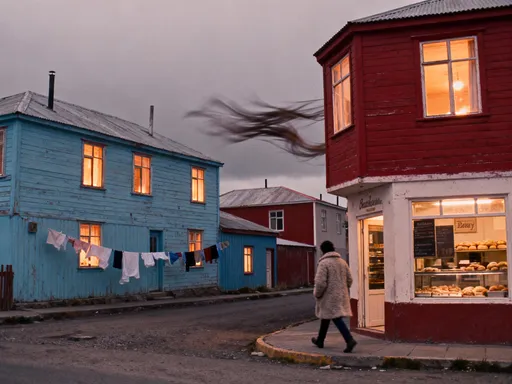
Just beyond the central avenues lie Punta Arenas’ most visually striking neighborhoods—San Juan and María Behety—where rows of brightly painted wooden houses climb the hillsides like patches of wildflowers. These homes, many over a century old, were built by European immigrants who arrived during the city’s golden age. Crafted from timber shipped in from Europe or harvested locally, they were designed to withstand the region’s relentless winds and freezing temperatures. Steep roofs shed snow, double-glazed windows resist frost, and narrow alleyways create windbreaks between blocks. What could have been purely functional has become deeply expressive: each house is painted in bold blues, reds, greens, and yellows, a defiance of the gray skies and a celebration of individuality.
Walking through these barrios feels like stepping into a living postcard, yet one that pulses with daily life. Clotheslines strung between homes flap wildly in the gales, children race down steep streets on bicycles, and dogs bark from behind weathered fences. The sound of wind is constant—rattling shutters, whistling through eaves, howling down alleyways. Residents speak of it as a companion, sometimes an adversary, but never something to fear. Many homes feature wooden porches with windbreaks, where families gather with tea even in winter, wrapped in thick wool blankets. The pride in homeownership here is palpable; paint is refreshed regularly, gardens are tended despite the cold, and decorative touches—carved gables, floral window boxes—hint at personal stories.
These neighborhoods are not preserved behind velvet ropes. They are lived-in, evolving, and deeply personal. Some homes have been passed down through generations, their interiors blending antique furniture with modern comforts. Others have been carefully restored by younger residents who moved back from Santiago or abroad, drawn by the city’s quiet charm and affordability. In recent years, local preservation efforts have gained momentum, with city programs offering support for maintaining historic facades. Yet the true guardians of these barrios are the residents themselves, who understand that their homes are not just shelters, but statements of identity in a place where standing firm against the wind is both a literal and metaphorical act.
Where Stories Live: Culture in the Everyday
In Punta Arenas, culture is not confined to galleries or performance halls. It lives in the steam rising from a kettle in a kitchen, in the laughter shared over a card game, in the scent of fried dough from a neighborhood fritanguería. The city’s culinary traditions are among its most enduring expressions of identity. Bakeries, known locally as *panaderías*, serve *tortas negras*—dense, spiced fruitcakes that originated with British settlers—and *sopaipillas*, golden fried dough rounds often eaten with pebre, a spicy Chilean salsa. These treats are not holiday specialties; they are everyday comforts, shared at breakfast, during afternoon tea, or as late-night snacks.
Equally important are the social rituals that sustain community bonds. One of the most cherished is *la sobrepuesta*, an informal gathering that typically takes place in the late afternoon. Neighbors, often elderly women, invite each other into their homes for tea, cake, and conversation. There is no agenda, no schedule—just the simple act of being together. These gatherings reinforce a culture of mutual care, where news is exchanged, advice is given, and loneliness is gently kept at bay. In a city where winters are long and dark, such moments of warmth are essential.
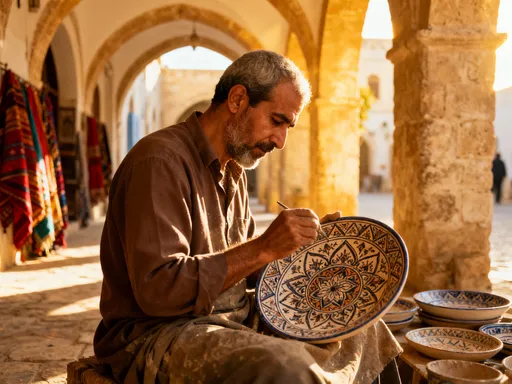
Local commerce also reflects cultural continuity. Shops in the Mercado Municipal sell hand-knitted garments made from *guanaco* wool, a soft, warm fiber from the native camelid. Artisans sit at small stalls, often knitting as they chat with customers, their fingers moving automatically as they discuss weather, family, or the price of wool. Radio stations broadcast folk music throughout the day—melancholic ballads, accordion tunes, and songs in Patagonian Spanish, rich with regional idioms. Even grocery stores play these melodies, creating a soundscape that feels both nostalgic and immediate. These are not performances for tourists; they are the quiet, persistent heartbeat of a culture that values presence over spectacle.
Voices of the Wind: Language and Identity
The way people speak in Punta Arenas is as distinctive as the landscape. The local dialect, known as *puntarenense*, carries traces of multiple influences: Castilian Spanish, maritime slang, words borrowed from indigenous Kawésqar and Selk’nam languages, and even fragments of English from 19th-century whalers and traders. The accent is crisp, with a slight drawl, and sentences often end with a dry, understated humor that reflects the region’s stoic character. Phrases like *“acá no pasa nada”*—“nothing happens here”—are said not with boredom, but with a kind of proud resignation, as if the lack of drama is itself a virtue.
Listen closely, and you’ll hear unique expressions woven into daily speech. *“Está cayendo un chubasco”* means a sudden downpour; *“hace pampero”* refers to the strong west wind that sweeps across the strait. Some older residents still use *“mate”* not just for the herbal tea, but as a term of camaraderie—“¿Cómo estás, mate?”—a remnant of British and Irish influence. Children learn these phrases at home, absorbing them as naturally as they learn to zip up their jackets against the wind.
Language here is not just a tool for communication; it is a marker of belonging. Outsiders, even Chileans from the north, are often gently teased for their pronunciation or unfamiliarity with local terms. But this is not exclusion—it is a form of inclusion through initiation. When a visitor learns to say *“gracias, che”* or asks for directions using the correct local landmarks, they are acknowledged with a nod, a smile, perhaps an invitation to share a coffee. The dialect, shaped by isolation and survival, has become a quiet badge of resilience, a way of saying, “We’ve endured, and we’ve done it our way.”
Hidden in Plain Sight: Off-the-Beaten-Path Experiences
While guidebooks often highlight Punta Arenas as a gateway to Torres del Paine or Ushuaia, the city’s true richness lies in its quieter corners. One such gem is a family-run *fonda* tucked behind the old fire station, where slow-cooked lamb stews simmer for hours in cast-iron pots. The menu is handwritten, the tables are small, and the owner greets regulars by name. There are no English translations, no Instagrammable décor—just honest food served with warmth. Another hidden spot is Mirador Cerro de la Cruz, a simple viewpoint reachable by foot or bus, where the entire strait unfolds below, dotted with cargo ships and seabirds. At sunset, the light turns the water gold, and the wind carries the distant sound of foghorns.
For those interested in local history, the Museo Salesiano Maggiorino Borgatello offers a thoughtful look at Patagonian life, from indigenous cultures to early European settlement. Housed in a converted 19th-century home, it feels intimate, almost personal. Exhibits include traditional Selk’nam clothing, antique fishing tools, and photographs of early sheep ranches. Unlike large national museums, this one speaks in a quiet voice, inviting contemplation rather than spectacle.
To experience Punta Arenas authentically, visitors should embrace slowness. The best time to explore is mid-morning or late afternoon, when locals are out running errands or enjoying a break. Public buses are reliable and inexpensive, offering a chance to observe daily rhythms. When speaking with residents, a simple greeting—“Buenos días”—goes a long way. Avoid intrusive questions about personal life; instead, comment on the weather, the beauty of a house, or the smell of baking bread. Most locals appreciate genuine curiosity and will often respond with quiet generosity, perhaps recommending a favorite bakery or sharing a story about the neighborhood. The key is to move with respect, to listen more than speak, and to understand that in Punta Arenas, hospitality is not performative—it is woven into the ordinary.
Why These Streets Matter: Preserving a Living Culture
In an age of homogenized travel, where destinations are often reduced to checklists and photo ops, Punta Arenas offers something rare: a place where culture is not performed, but lived. Its neighborhoods are not curated for outsiders; they are shaped by generations of residents who have learned to thrive in one of the world’s most remote urban environments. The painted houses, the shared teas, the wind-carried accents—these are not relics, but living threads in a continuing story. To walk these streets is to witness how identity is built not in grand declarations, but in daily choices: how a home is painted, how a greeting is exchanged, how a stew is seasoned.
Today, the city faces pressures from globalization, climate change, and shifting economic realities. Yet there is a growing awareness of the value of its cultural fabric. Local organizations, in partnership with the municipality, are working to protect historic districts, support traditional artisans, and document oral histories before they are lost. School programs teach children about Patagonian heritage, including indigenous languages and traditional crafts. These efforts are not about freezing the city in time, but about ensuring that its unique character continues to evolve with integrity.
For travelers, Punta Arenas offers a powerful reminder: the most meaningful journeys are not always to the most famous places, but to those where life unfolds quietly, authentically, and with deep-rooted care. To understand a culture, one must look beyond the postcard sights and listen to the hum of ordinary life—the clink of teacups, the creak of wooden stairs, the laughter drifting from an open window. In Punta Arenas, these small sounds tell a big story: of resilience, of community, of a Chilean identity shaped not by the center, but by the edge. And in that, there is a quiet invitation—to slow down, to pay attention, and to discover that the soul of a place is often found not in its monuments, but in its streets.