You Won’t Believe These Hidden Angles in Bodrum – Pure Magic Awaits
Bodrum isn’t just a coastal gem—it’s a photographer’s dream hiding in plain sight. I went searching for the real magic beyond the postcard views and found perspectives that stopped me in my tracks. From cliffside stairways drenched in golden light to quiet village rooftops with panoramic seas, every frame told a story. If you’re chasing moments that actually feel like discovery, not just checkmarks on a list, this is where the journey begins. The beauty of Bodrum isn’t only in its turquoise waters or ancient ruins—it’s in the quiet corners where light dances on whitewashed walls, where daily life unfolds in rhythms undisturbed by crowds, and where a single glance through the lens can capture centuries of Aegean soul. This is not about ticking off famous spots, but about uncovering a deeper, more personal narrative through the art of seeing.
Why Bodrum Works for Visual Storytelling
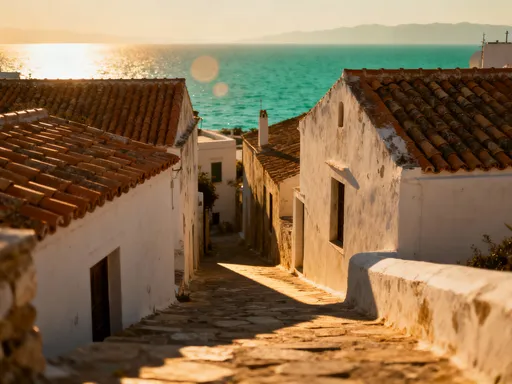
Bodrum possesses a rare alchemy that makes it uniquely suited to visual storytelling. Its geographical position on the westernmost tip of Turkey’s Anatolian peninsula bathes the region in a quality of Aegean light that photographers dream of—soft in the early morning, rich and golden at dusk, and sharp yet luminous during midday. This light interacts beautifully with the town’s iconic architecture: rows of cubic, whitewashed buildings with blue doors and shutters, narrow cobbled lanes that twist like ribbons through the hills, and domed rooftops that catch the sun at unexpected angles. These visual elements are not merely decorative; they are the result of centuries of adaptation to climate and culture, forming a naturally harmonious palette that requires little enhancement through the lens.
The cultural layers beneath the surface add depth to every image. Bodrum, historically known as Halicarnassus, was once home to one of the Seven Wonders of the Ancient World—the Mausoleum at Halicarnassus. While only fragments remain today, the spirit of antiquity lingers in the stones, in the rhythm of the harbor, and in the faces of those who have lived here for generations. This blend of ancient heritage and modern Mediterranean ease creates a visual narrative that feels both timeless and immediate. When photographing in Bodrum, one isn’t just capturing a place, but a continuity of life shaped by sea, sun, and tradition.
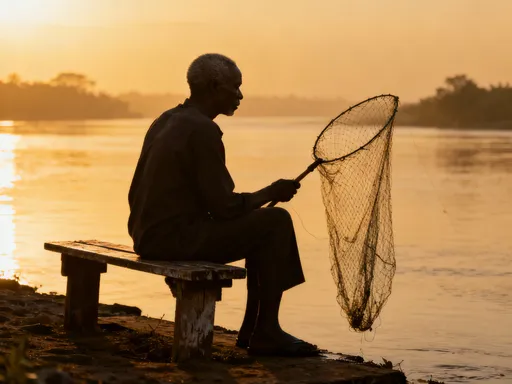
Timing is everything. The golden hour—those precious minutes just after sunrise and before sunset—transforms Bodrum from picturesque to transcendent. During these times, the light wraps around buildings like a warm veil, casting long shadows and highlighting textures in stone, wood, and fabric. A simple alleyway becomes a corridor of light and shadow; a quiet harbor scene turns into a shimmering tableau of reflections and silhouettes. The difference between an ordinary snapshot and a compelling photograph often comes down to patience and presence—waiting for the light to align, for a fisherman to cast his net, or for a cat to stretch across a sunlit step. These are not staged moments, but authentic fragments of daily life, elevated by timing and attention.
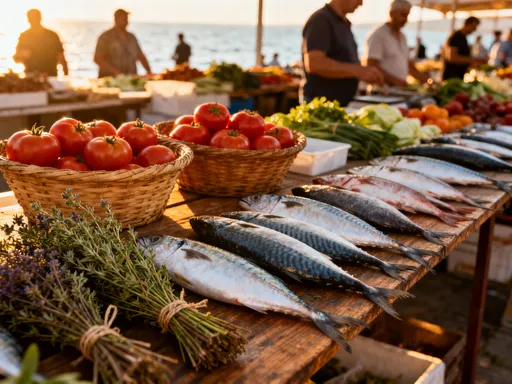
Equally important is the organic composition found in local routines. In Bodrum’s markets, colors explode in pyramids of spices, fresh figs, olives, and herbs laid out on woven cloths. Fishermen mend their nets on wooden docks, their hands moving with practiced ease, while small boats bob gently in the harbor. Children play near the castle walls, their laughter echoing through stone corridors. These scenes unfold naturally, offering photographers the chance to capture emotion, movement, and cultural authenticity without intrusion. The key is to observe quietly, to anticipate moments rather than force them, and to let the environment guide the lens. When done with respect and sensitivity, photography becomes a form of listening—a way to honor the place and its people through careful observation.
The Castle View That Changes Everything
No visit to Bodrum is complete without exploring St. Peter’s Castle, a majestic fortress that rises from the peninsula like a sentinel of history. Built by the Knights of St. John in the 15th century, the castle now houses the Museum of Underwater Archaeology and offers some of the most breathtaking vantage points in the region. But beyond its historical significance, it serves as a masterclass in photographic perspective. The way the structure commands the coastline means that nearly every rampart, tower, and courtyard provides a new frame for the surrounding landscape—from the bustling harbor to the distant islands shimmering in the Aegean.
Among the many viewpoints, the northeastern ramparts stand out for their dynamic composition. From this angle, the harbor unfolds in a sweeping curve, dotted with wooden gulets, sailboats, and fishing vessels. The contrast between the deep blue of the sea and the white of the buildings creates a natural visual hierarchy, drawing the eye toward the water’s edge. At sunrise, the low light spills across the harbor, gilding the masts and setting the water ablaze with reflections. At sunset, the sky melts into hues of rose and amber, casting a warm glow over the entire scene. This is the moment when the view transcends documentation and becomes art.
One challenge, however, is the presence of crowds. As one of Bodrum’s most visited sites, the castle attracts large numbers of tourists, especially in the late afternoon. To capture wide-angle shots without unwanted figures, timing is crucial. Arriving early in the morning—ideally just after the gates open—ensures quieter access and softer light. Alternatively, visiting during the shoulder hours before sunset allows for a gradual build of light while avoiding peak congestion. For those willing to wait, even brief lulls in foot traffic can provide clean frames, especially if you position yourself slightly off the main pathways.
From a technical standpoint, a wide-angle lens (between 16–35mm) is ideal for capturing the expansive harbor views, while a mid-range zoom (70–200mm) allows for tighter compositions of boats, architectural details, or distant islands. A polarizing filter can help reduce glare on the water and enhance sky contrast, particularly on bright days. Tripods are permitted in most areas, but discretion is advised to avoid obstructing walkways. Beyond equipment, the real tool is patience—waiting for a boat to glide into frame, for clouds to shift, or for a bird to take flight across the skyline. These small moments are what elevate a photo from scenic to unforgettable.
Hidden Rooftops in the Old Town
While the castle offers panoramic authority, some of Bodrum’s most intimate and soulful views come from the rooftops of the old town. Tucked within the labyrinthine alleys of the historic district are guesthouses, family-run pensions, and quiet cafés that open onto elevated terraces with unobstructed sea vistas. These spaces are often overlooked by mainstream guidebooks, yet they offer photographers a chance to see Bodrum from a more personal, human scale. Unlike the grand sweep of the castle, these rooftops feel lived-in, humble, and authentic—places where laundry flutters in the breeze, potted plants thrive in terracotta, and locals sip tea while watching the day unfold.
Finding these vantage points requires curiosity and a willingness to wander. The narrow streets of the old town—some so tight that only one person can pass at a time—twist and climb toward the upper reaches of the hillside. Following them upward often leads to unexpected discoveries: a weathered wooden door slightly ajar, revealing a courtyard with a stone staircase leading to a terrace; a small café with a few tables on a flat roof, where the owner doesn’t mind if you stay a little longer to take in the view. These are not commercialized photo spots, but organic extensions of daily life, where beauty is incidental rather than curated.
With this access comes responsibility. Many of these rooftops are private or semi-private spaces, and while some hosts welcome quiet visitors, it’s essential to be respectful. Always ask permission before entering or photographing from private property. If you’re staying at a guesthouse, inquire whether rooftop access is available. At cafés, purchasing a drink is a small but meaningful gesture of appreciation. The goal is not to exploit these spaces for the sake of a photo, but to engage with them mindfully, acknowledging that they belong to real people with real lives. When approached with humility, these interactions often lead to warmer, more meaningful experiences—and sometimes, even an invitation to return at golden hour.
The visual rewards are significant. From these elevated perches, the town reveals itself in layers—tile roofs stacked like steps, bougainvillea spilling over walls, the sea glinting between buildings. The light here is softer, diffused by the surrounding structures, creating a gentle contrast that’s ideal for portraits or atmospheric shots. Because these spots are less frequented, there’s time to compose deliberately, to experiment with angles, and to wait for the right moment. A single frame from one of these rooftops—a child running across a terrace, a cat leaping between walls, the first lights of evening flickering on—can carry more emotional weight than a dozen postcard-perfect panoramas.
Gümüşlük at Dusk – Where Light Meets Legend
Thirty minutes north of central Bodrum lies the coastal village of Gümüşlük, a place where myth and reality blur at the water’s edge. Once the ancient city of Myndos, Gümüşlük is best known today for its submerged ruins—remnants of a stone causeway that now lie beneath the waves, visible at low tide. According to local lore, these stones are the remains of a bridge built by giants, or perhaps a lost city swallowed by the sea. Whether legend or history, the effect is the same: walking through Gümüşlük feels like moving through a dreamscape where time is fluid and the past is never far beneath the surface.
It is at dusk that Gümüşlük reveals its full magic. As the sun sinks behind the hills, the light turns honeyed, casting long shadows across the ruins and setting the surface of the water ablaze. The stones, weathered by centuries of salt and tide, glow with a warm patina, their textures magnified by the low-angle light. Photographers will find endless opportunities here—close-ups of lichen-covered masonry, wide shots of the causeway stretching into the sea, or silhouettes of swimmers wading through the shallow channel. The interplay between ancient stone and modern life is especially poignant: a fisherman mending his nets beside a crumbling wall, a family dining at a seaside restaurant with ruins in the background, a dog chasing a ball across the tidal flats.
A recommended walking route begins at the main square, where small shops and tavernas line the cobblestone streets. From there, follow the path downhill toward the marina, passing whitewashed houses adorned with flower boxes and nautical charms. Continue past the fish market, where the day’s catch is laid out on ice, and emerge at the narrow strait that separates the mainland from the small island of Büyük Müsedra. This is the heart of the ancient causeway, now a favorite spot for swimmers and photographers alike. Staying until full darkness allows for long-exposure shots of the water’s movement and the soft glow of lanterns along the shore.
The real lesson of Gümüşlük is one of pace. In a world that often values speed and efficiency, this village invites slowness. It asks the visitor to pause, to look closely, to feel the texture of time. When photographing here, rushing leads to flat images—snapshots without soul. But when you slow down, when you sit on a rock and watch the light change minute by minute, the camera begins to capture not just what is seen, but what is felt. A single hour at dusk in Gümüşlük can yield a lifetime of visual memory, not because of how much you shoot, but because of how deeply you see.
Capturing Local Life Without Intrusion
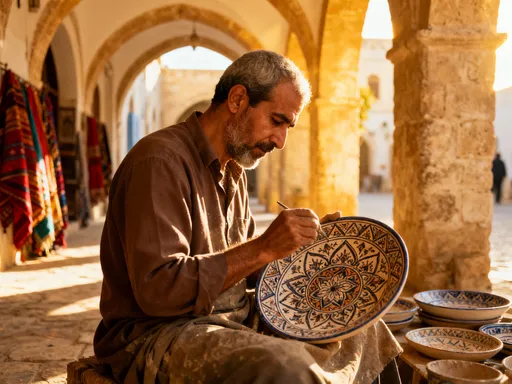
One of the greatest challenges—and privileges—of travel photography is photographing people. In Bodrum, as in any living community, locals go about their days with little regard for tourists behind cameras. The fisherman untangling his lines, the baker pulling bread from the oven, the woman arranging herbs at the market—these are not performances, but real moments of labor and life. Capturing them with dignity requires more than technical skill; it demands empathy, patience, and ethical awareness.
The most powerful images often come from waiting, not rushing. Rather than approaching someone and immediately raising the camera, spend time observing. Let your presence become familiar. A smile, a nod, a simple greeting in Turkish—"Merhaba"—can go a long way in building quiet rapport. In many cases, asking permission is not only respectful but enriching; it opens the door to conversation, to understanding, and sometimes to an even better shot—one taken with consent and connection. When permission isn’t possible or appropriate, such as in a crowded market, the key is to remain unobtrusive. Use a longer lens to maintain distance, shoot from the side rather than head-on, and avoid flash, which can feel invasive.
Another effective technique is to focus on details rather than faces. A hand arranging figs on a wooden crate, feet stepping off a boat onto the dock, a shadow stretching across a wall—these elements tell stories without requiring direct interaction. They invite the viewer to imagine the whole person, the full scene, without violating privacy. Movement can also add narrative depth: a vendor tossing herbs into a basket, a child chasing a ball down an alley, a flock of birds scattering from a rooftop. These dynamic moments feel alive, and when captured with care, they honor the rhythm of daily life rather than disrupting it.
One of the most memorable images I captured in Bodrum was of an elderly woman at the Bodrum Market, arranging bundles of mint, dill, and parsley on a faded cloth. She didn’t look at the camera; she was focused on her work, her hands moving with quiet precision. The light fell softly on her apron, highlighting the green of the herbs and the texture of her woven basket. I waited several minutes before taking the shot, ensuring I wasn’t interrupting her. Later, when I showed her the photo, she smiled and said simply, "This is how we live." That moment reminded me that photography, at its best, is not about taking, but about witnessing—about creating a record of humanity that is truthful, respectful, and deeply human.
The Coastal Path Less Photographed
While much of Bodrum’s fame centers on its harbor and historic core, some of the most rewarding photographic experiences lie beyond the main roads, along the lesser-traveled coastal paths between Yalıkavak and Göltürkbükü. These trails, carved into the rocky hillsides, offer a raw, unfiltered view of the Aegean coastline—untouched by mass tourism, uncluttered by signage, and alive with natural detail. Here, the landscape is rugged and authentic: wild thyme grows between stones, lizards dart across sun-baked rocks, and the scent of pine and salt hangs in the air.
The terrain varies from gentle slopes to steep descents, with elevation changes that create dramatic shifts in perspective. One moment you’re walking along a ridge with 180-degree sea views; the next, you’re descending a narrow path that opens onto a hidden cove with turquoise water and a single wooden boat pulled ashore. These transitions provide endless framing opportunities—foreground rocks leading the eye to distant islands, silhouetted trees against a bright sky, or reflections in tidal pools after a morning rain. Because these areas are less accessible, they attract fewer visitors, allowing for solitude and contemplative shooting.
For photographers, preparation is key. The sun in this region is intense, especially between 11 a.m. and 3 p.m., so sun protection—hat, sunscreen, sunglasses—is essential. A lightweight backpack with water, snacks, and a small first-aid kit ensures comfort during longer walks. In terms of gear, a versatile zoom lens (24–105mm) is ideal for adapting to changing scenes, while a compact tripod can be useful for long exposures on rocky outcrops. A polarizing filter helps cut glare on water and enhances sky contrast, particularly on clear days. Because the paths can be uneven, sturdy walking shoes with good grip are recommended.
What makes these trails truly special is their unpredictability. Unlike curated viewpoints, these routes don’t guarantee a “perfect” shot—they offer the chance to discover one. A sudden clearing in the trees might reveal a shepherd guiding his flock; a hidden staircase might lead to a forgotten chapel with sea views. These moments cannot be planned, only invited through presence and openness. The camera becomes a companion in exploration, not a goal in itself. When you walk these paths with intention, you’re not just collecting images—you’re building a visual diary of connection, curiosity, and quiet wonder.
Putting It All Together – Your Visual Journey
Photographing Bodrum is not about capturing every famous landmark or ticking off the most Instagrammed spots. It’s about weaving together a personal narrative—one that reflects not just what the place looks like, but how it feels to be there. Each perspective—whether from the ramparts of St. Peter’s Castle, a quiet rooftop in the old town, or a sunlit path above the sea—adds a thread to that story. When combined, these moments create a richer, more layered understanding of Bodrum, one that goes beyond aesthetics to touch the essence of place.
The most meaningful travel photography emerges not from chasing perfection, but from embracing curiosity. It’s in the decision to take the narrower alley, to sit longer at a café, to return to the same spot at a different time of day. It’s in the willingness to slow down, to observe, and to let the environment reveal itself gradually. In doing so, the camera becomes more than a tool—it becomes a bridge between the traveler and the world, a way to deepen attention and foster connection.
As you explore Bodrum, remember that your perspective matters. You don’t need the most expensive gear or the most famous vantage point to create powerful images. What you need is presence, respect, and intention. Let the light guide you. Let the rhythm of local life inform your timing. Let the textures, colors, and quiet moments speak through your lens. In return, you’ll come away not just with photographs, but with memories that resonate—images that, years later, will still carry the warmth of the Aegean sun and the quiet magic of discovery.
So go ahead—explore with curiosity, shoot with intention, and let Bodrum reveal itself to you, one hidden angle at a time.