You Won’t Believe How Stunning Ottawa’s Architecture Is – Must-See Spots for Perfect Shots
Ottawa isn’t just Canada’s capital—it’s a visual playground. I was blown away by how every landmark here feels like a set from a movie. From the gothic spires of Parliament Hill to the sleek lines of the National Gallery, the city blends history and art in ways that scream take my photo. Whether you're chasing golden-hour light or moody reflections in the Rideau Canal, these iconic structures don’t just stand out—they perform for the lens. With its carefully preserved heritage, modern architectural flair, and natural beauty woven throughout, Ottawa offers a rare harmony of elements that photographers dream of capturing. It's not just about taking pictures; it's about telling stories through light, shadow, and structure.
The Magic of Ottawa’s Architectural Identity
Ottawa’s skyline is more than a collection of buildings—it’s a narrative in stone, glass, and steel. Unlike capitals that rely on sheer size or futuristic ambition, Ottawa impresses with subtlety, dignity, and thoughtful design. The city’s architecture reflects its role as a steward of national identity, where government, culture, and public space converge in balanced elegance. Walking through downtown, one encounters centuries in a single glance: the ornate carvings of 19th-century Gothic Revival structures stand shoulder to shoulder with bold 21st-century forms that embrace transparency and light. This architectural dialogue creates a dynamic yet harmonious urban landscape, ideal for capturing contrast and continuity in a single frame.
What sets Ottawa apart for photography is how its buildings interact with their surroundings. The changing seasons dramatically alter the mood of each location. In winter, snow blankets the rooftops of Parliament Hill, softening its sharp edges and turning the Peace Tower into a frosted sentinel. Spring brings pastel blossoms along the canal, framing stone facades with delicate color. Summer twilight bathes the city in golden light, especially along the Ottawa River, where reflections double the visual impact. Autumn paints the trees in fiery hues, adding warmth to cool granite and limestone. These seasonal shifts mean no two visits yield the same shot—each trip offers a fresh perspective, encouraging return journeys and deeper exploration.
Moreover, the city’s commitment to preservation ensures that historical integrity remains intact while allowing room for innovation. New constructions are often designed to complement, not compete with, their neighbors. This respect for context makes Ottawa feel cohesive rather than chaotic. For photographers, this means predictable sightlines, clean compositions, and an abundance of symmetry—essential elements for compelling architectural imagery. Whether using a DSLR or a smartphone, the thoughtful layout of the city rewards those who observe closely and wait for the right moment.
Parliament Hill: Power, History, and That Iconic View
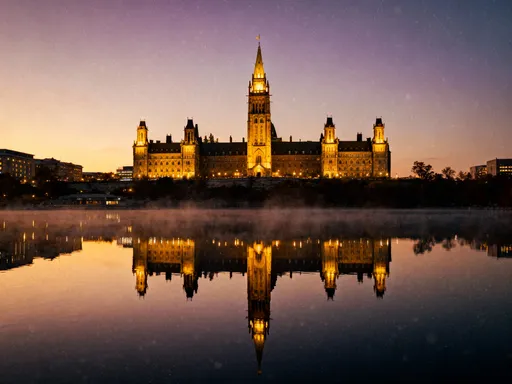
No image of Ottawa is more recognizable than the silhouette of Parliament Hill rising above the Ottawa River. The Centre Block, with its soaring Peace Tower and intricate Gothic detailing, serves as both a seat of government and a monument to national pride. Constructed in the late 19th and early 20th centuries, the complex exemplifies Victorian Gothic Revival architecture, characterized by pointed arches, ribbed vaults, and elaborate stonework. Every gargoyle, finial, and tracery window tells a story—some mythological, others symbolic of Canada’s institutions and values. This richness of detail invites close-up photography, where textures and craftsmanship come alive under sharp focus.
For the most striking wide-angle shots, position yourself on the opposite riverbank at Confederation Park or near the Canadian War Museum in Gatineau. From these vantage points, the full grandeur of the hill unfolds, especially during sunrise when the rising sun strikes the limestone façade, making it glow with a warm, almost ethereal light. The reflection in the river doubles the visual impact, creating a mirror image that enhances symmetry and depth. A polarizing filter can help reduce glare and intensify the blue of the sky, adding contrast to the warm tones of the stone.
During summer months, the Changing of the Guard ceremony offers a unique opportunity to capture movement and tradition. Dressed in red tunics and bearskin hats, the ceremonial guards march with precision from the Cartier Square Drill Hall to Parliament, accompanied by a military band. The colorful uniforms, polished boots, and synchronized steps create a vivid scene against the historic backdrop. While photography is allowed from public areas, using a telephoto lens helps isolate details without intruding on the ceremony. Timing is key—arrive at least 30 minutes early to secure a good spot along the route.
At night, the Sound and Light Show transforms the Centre Block into a storytelling canvas. For 30 minutes after dusk, projections animate the building’s surface, depicting pivotal moments in Canadian history—from Indigenous heritage to Confederation and modern achievements. The show uses light, music, and narration to engage audiences, making it a multisensory experience. Photographers can use tripods to capture long exposures, recording the shifting colors and animations in a single frame. The effect is surreal, turning stone into moving image and history into spectacle. Because the show runs seasonally (typically late June to early September), checking the official parliamentary website for dates and times is essential for planning.
The Rideau Canal as a Reflective Frame
The Rideau Canal is more than a waterway—it’s one of Ottawa’s most versatile photographic tools. Designated a UNESCO World Heritage site in 2007, the canal stretches over 200 kilometers from Ottawa to Kingston, but its urban section offers some of the best urban reflections in North America. In summer, the still surface of the water becomes a natural mirror, perfectly doubling the skyline and surrounding greenery. When framed correctly, the reflection can create a sense of balance and infinity, turning an ordinary building into a symmetrical masterpiece. The best spots for reflection photography include the locks near Dow’s Lake, the Alexandra Bridge viewpoint, and the stretch between Laurier Avenue and Somerset Street.
Early morning is the optimal time for canal photography. The air is calm, the light is soft, and the water is least disturbed by boat traffic. Fog often lingers on the surface at dawn, adding a dreamlike quality to images. A slight ripple can enhance texture without breaking the reflection entirely—this subtle movement introduces a dynamic element that static shots sometimes lack. Using a low angle, either from a kneeling position or a tripod close to the ground, maximizes the reflection and minimizes distracting foreground elements. A neutral density filter can extend exposure time, smoothing the water even further and capturing cloud movement in the sky.
In winter, the canal transforms into the world’s largest naturally frozen skating rink, stretching 7.8 kilometers through the heart of the city. This seasonal shift offers entirely different photographic opportunities. The ice becomes a clean, white leading line that guides the viewer’s eye toward illuminated landmarks like Parliament Hill and the Château Laurier. Skaters in colorful winter gear add human interest and scale to wide compositions. Night photography along the canal is particularly effective, as the string lights above the ice create a warm, glowing pathway. Long exposures capture light trails from moving skaters, adding motion and energy to the frame.
Beyond its visual appeal, the Rideau Canal also serves as a historical thread connecting past and present. Built between 1826 and 1832 as a military supply route, it played a strategic role in Canada’s early defense. Today, it’s a recreational and cultural artery, lined with benches, plaques, and interpretive signs that explain its significance. Photographers who take the time to learn this history often find deeper meaning in their images, allowing them to convey not just beauty but context. Capturing the canal isn’t just about aesthetics—it’s about documenting a living piece of Canadian heritage.
National Gallery of Canada: Where Art Meets Architecture
The National Gallery of Canada is a work of art in itself. Designed by Moshe Safdie and opened in 1988, the building blends modernist geometry with classical references, creating a structure that is both bold and timeless. Its most distinctive feature is the glass spire—43 meters high—that rises like a crystal shard above the surrounding buildings. The spire captures and refracts light throughout the day, changing color with the sky and weather. At sunset, it glows amber; on overcast days, it becomes a soft silver beacon. The use of glass and granite gives the exterior a sleek, reflective quality, allowing the building to mirror its environment and blend with the landscape.
Outside, the plaza is home to one of the most photographed sculptures in Canada: Maman by Louise Bourgeois. This towering spider, made of bronze, marble, and stainless steel, stands over nine meters tall and spans nearly ten meters wide. Its long, delicate legs create dramatic lines that contrast with the solidity of the gallery behind it. Photographers often use the spider as a foreground element, framing the glass spire or the Ottawa River beyond. The interplay of organic form and architectural rigidity produces visually striking compositions that invite interpretation. Early evening light casts long shadows from the legs, enhancing depth and dimension.
The building’s location on a slight rise gives it commanding views of Parliament Hill and the river, making it an excellent spot for cityscape photography. From the front steps, one can capture a layered composition: Maman in the foreground, the gallery in the middle, and the Peace Tower in the distance. This alignment creates a visual journey from contemporary art to national history, encapsulating Ottawa’s cultural narrative in a single image. Wide-angle lenses work best here, capturing the full sweep of the scene without distortion.
Inside, the Great Hall is flooded with natural light from a vast glass wall facing the river. The space houses masterpieces by Canadian artists such as the Group of Seven and Emily Carr, but the architecture itself becomes part of the exhibit. The interplay of light, space, and material creates an atmosphere of quiet reverence. While interior photography is permitted in public galleries (without flash), the real magic remains outside. Late afternoon offers the best exterior lighting, when the sun hits the glass at an angle, creating internal reflections that make the building appear to glow from within.
Château Laurier and the Fairmont Effect
Standing proudly at the corner of Rideau Street and Sussex Drive, the Fairmont Château Laurier is a masterpiece of early 20th-century railway architecture. Completed in 1912, the hotel was inspired by the châteaux of France’s Loire Valley, featuring steep copper roofs, turrets, and ornate stonework. Its commanding presence and regal silhouette make it a favorite subject for wide-angle cityscapes and intimate architectural details alike. The hotel’s location—just steps from Parliament Hill and the Rideau Canal—ensures it appears in countless skyline photos, often serving as a visual anchor that grounds the composition.
The main façade, facing the train station and the river, offers the most dramatic view. The central tower rises above the rest of the structure, crowned with a distinctive cupola. At sunrise, the eastern exposure catches the first light, illuminating the cream-colored limestone and warming the green patina of the copper roofs. A telephoto lens can compress the perspective, bringing the hotel and Parliament Hill closer together in the frame, emphasizing their visual relationship. The reflection in the canal enhances this connection, creating a seamless blend of nature and architecture.
Up close, the building reveals intricate details worth photographing: carved stone faces, decorative ironwork, and arched doorways with brass fittings. The main entrance, framed by two stone lions, exudes grandeur and history. While the interior lobby is generally reserved for guests, limited photography is sometimes possible from the public areas near the restaurant or gift shop. Even if access is restricted, the exterior offers endless possibilities. Night photography highlights the warm glow of interior lights against the dark stone, emphasizing the hotel’s role as a welcoming landmark in the city’s heart.
Over the years, the Château Laurier has hosted royalty, presidents, and celebrities, adding a layer of historical prestige to its image. Knowing this heritage can enrich a photographer’s approach, encouraging images that convey not just beauty but legacy. Whether captured in fog, snow, or golden hour light, the hotel remains a symbol of enduring elegance in a changing city.
Canadian Museum of History: Across the River, Beyond the Frame
Just across the Ottawa River in Gatineau, Quebec, the Canadian Museum of History offers one of the most breathtaking viewpoints in the region. Designed by Douglas Cardinal and opened in 1989, the building’s flowing, organic curves mimic the natural landscape, as if sculpted by wind and water. The exterior, made of limestone and glass, reflects the sky and river, changing appearance with the weather and time of day. From the front terrace, photographers are treated to the quintessential panoramic view of Ottawa’s skyline—Parliament Hill centered, flanked by the Château Laurier and the National Gallery, all framed by the curve of the river.
This vantage point is especially powerful at sunrise, when the rising sun backlights the city, creating a silhouette effect that emphasizes shape and form. As the light strengthens, the limestone of Parliament begins to glow, gradually revealing detail. A tripod is recommended for sharp, high-resolution images, particularly if capturing time-lapse sequences or HDR composites. The wide-angle perspective available from the terrace allows for expansive compositions that include both architecture and nature, reinforcing the harmony between urban design and the environment.
The museum’s own architecture provides ample subject matter. The undulating rooflines, angular glass walls, and use of natural materials create a sense of movement and continuity. Close-up shots of the stonework reveal texture and craftsmanship, while wide shots emphasize the building’s integration with the surrounding parkland. The Grand Hall inside, with its towering totem poles and natural light, is a photographic highlight, though interior rules may limit flash or tripods. For many, however, the exterior and the riverside walkway remain the main attractions.
The museum’s location in Gatineau also offers a different perspective—literally and culturally. Being in Quebec provides a subtle shift in atmosphere, reminding visitors of Canada’s bilingual and bicultural identity. The walk from the Alexandra Bridge to the museum is scenic and peaceful, often used by locals for jogging or walking. This blend of accessibility and grandeur makes the site not just a photo opportunity but a meaningful destination.
Hidden Gems: Lesser-Known but Picture-Perfect
While the major landmarks draw well-deserved attention, Ottawa’s quieter buildings offer equally compelling photo opportunities—with fewer crowds. The Dominion Archives of Canada, now part of Library and Archives Canada, features a neoclassical design with a symmetrical façade, a prominent clock tower, and elegant stone columns. Bathed in morning light, the building glows with quiet dignity. Its location near the Supreme Court and the War Museum makes it easy to include in a broader photography tour. The surrounding gardens add seasonal interest, from spring tulips to autumn foliage.
Ottawa City Hall, located on Laurier Avenue, presents a striking contrast with its modern, wave-like roof made of white concrete and glass. The building, completed in 1990, symbolizes openness and transparency in government. The curved roof creates dynamic lines that are especially effective in black-and-white photography. The front plaza, with its water features and public art, offers compositional variety. During winter, snow collects on the roof’s folds, enhancing its sculptural quality.
Another overlooked site is the Ottawa Justice Centre. Its minimalist design—clean lines, reflective glass, and geometric patterns—lends itself to abstract architectural photography. The building’s façade changes dramatically with the light, appearing solid in direct sun and translucent in overcast conditions. Reflections of passing clouds or nearby trees create ever-changing patterns on the surface, making it a dynamic subject throughout the day.
These lesser-known locations allow photographers to work at a relaxed pace, experimenting with angles, focus, and exposure without the pressure of crowds. They also offer a chance to discover personal favorites—spots that may not appear in guidebooks but hold unique visual appeal. By venturing beyond the obvious, one gains a deeper appreciation for Ottawa’s architectural diversity and the thoughtful planning that shapes its urban identity.
Framing the Capital, One Shot at a Time
Ottawa’s architecture is not merely functional—it is expressive, intentional, and deeply connected to the nation’s story. Each building, bridge, and public space contributes to a visual language that speaks of heritage, progress, and unity. For photographers, the city is a living studio where light, season, and perspective constantly reshape the canvas. Whether capturing the grandeur of Parliament at dawn or the quiet elegance of a hidden courtyard, every image becomes a tribute to design and time.
What makes Ottawa truly special is its balance—between old and new, nature and structure, stillness and movement. This equilibrium creates compositions that are not only beautiful but meaningful. The city rewards those who return again and again, who learn its rhythms and respect its quiet dignity. With a camera in hand and curiosity in heart, one doesn’t just photograph Ottawa—they engage with it, frame by frame, moment by moment. Pack your lens, chase the light, and let Canada’s capital stage your next masterpiece.